





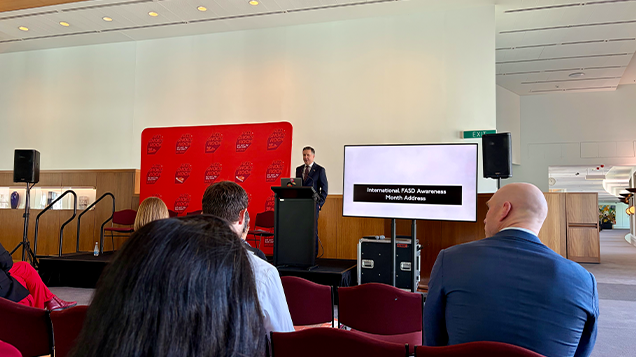
 Today is International FASD Awareness Day, a day dedicated to raising awareness of Fetal Alcohol Spectrum Disorder (FASD), supporting people with FASD and their families and communities and encouraging conversations that can lead to greater understanding.
This special day falls within FASD Awareness Month which runs throughout September. During this month, people are wearing red shoes as part of the Red Shoes Rock campaign, a simple but powerful way to start conversations about FASD. The campaign began when advocate RJ Formanek wore bright red shoes to draw attention to what is often described as an invisible disability.
This year’s FASD Awareness Month theme shines a spotlight on children and young people in out-of-home care. Data from the Australian FASD Registry show that only around 20% of children diagnosed with FASD live with a biological parent, with most living in foster care, kinship care, adoptive families or other care arrangements.
Throughout September, the FASD Hub Australia joins with the Foundation for Alcohol Research and Education (FARE), the National Organisation for Fetal Alcohol Spectrum Disorders Australia (NOFASD), and the National Aboriginal Community Controlled Health Organisation (NACCHO) and FASD Research Australia NHMRC Centre of Research Excellence and lived experience advocates to raise awareness and advocate for improved outcomes for people with FASD.
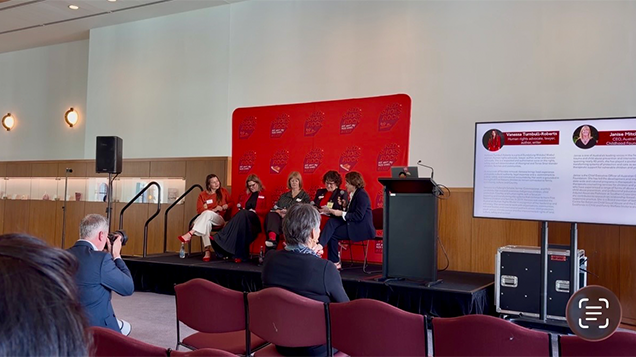 As part of these efforts, the organisations recently came together at Parliament House in Canberra. The event brought together senators, ministers, Members of Parliament and sector leaders to raise awareness of FASD and advocate for improved support for people with FASD and their families. Addressing the audience, the Hon. Mark Butler MP, Minister for Health, Disability and Ageing, recognised the importance of increasing understanding of FASD and the importance of supporting children and young people in out-of-home care with FASD.
Early identification is important. Screening for prenatal alcohol exposure and developmental concerns when children enter out-of-home care can help identify those who may benefit from further assessment and support. It can also help carers better understand a child’s strengths and support needs.
Foster, kinship and adoptive caregivers play an important role in helping children with FASD thrive. Access to information, services and ongoing support can help children and young people stay engaged in learning, build on their strengths and achieve their goals.
If you see someone wearing red shoes today, ask them about it. A simple conversation can help reduce stigma, increase awareness and build a more informed and inclusive community for people with FASD.
Learn more about FASD Awareness Month and the Red Shoes Rock campaign.